

It happened on a Tuesday. My son, Leo, decided he was done walking right in the middle of a busy grocery store. I did what every tired parent does: I leaned over, twisted slightly to grab his favorite toy, and hoisted all thirty-two pounds of him onto my right hip. *Pop.* Not a loud sound, but a sickening internal ‘zip’ that told me my lower back was officially on strike. I spent the next three days walking like a stiff C-3PO, unable to even tie my own shoes. It was embarrassing, but more than that, it was a wake-up call. I realized I’d been holding my baby in ways that were slowly destroying my posture and my nerves. Today, I’m going to show you exactly how to navigate the ‘toddler years’ without spending half your paycheck on heating pads. We are going to fix how you move, how you lift, and how you survive those ‘carry me’ meltdowns. Have you ever felt that terrifying twinge while just trying to be a good parent?
Stop Treating Your Spine Like a Crane
For a long time, I made a massive mistake: I thought if I just did enough planks, my back would be invincible. I assumed core strength was a magic shield that allowed me to lift anything from any angle. I was wrong. The human spine is a marvel of engineering, but it hates being used as a crane—especially one that twists under a heavy, shifting load. When you hike a heavy toddler onto one hip, you aren’t just carrying weight; you are creating a massive shearing force on your lumbar discs. According to research published in the Journal of Biomechanics, asymmetrical loading can increase spinal compression by over 40% compared to a balanced carry. That’s a recipe for a herniation. I learned the hard way that simple posture adjustments are far more important than how many sit-ups you can do. By shifting your center of gravity and engaging your legs properly, you can actually carry your toddler without constant strain.
Does This Actually Work for a Squirmy Kid?
You might be thinking that a ‘proper lift’ is impossible when a three-year-old is thrashing around like a landed trout. It’s a fair point. Skepticism is healthy here because kids aren’t dead weights; they are unpredictable, moving targets. However, the techniques I’ve developed aren’t about being a robot; they are about ‘biochemical leverage.’ I found that even when Leo was in full meltdown mode, if I managed to release my tight psoas muscles and lead with my hips rather than my lower back, the pain stayed away. It’s about building a foundation that can handle the chaos of parenthood. Let’s dive into the mechanics of the ‘Safe Scoop’ and why your current lifting style is a ticking time bomb for your L5-S1 disc.
Turn Your Glutes Into a Shield
The ‘Safe Scoop’ isn’t just a fancy name; it’s a structural shift in how you view your body’s power center. Most parents make the mistake of bending at the waist, turning their spine into a giant fishing rod that’s about to snap. Instead, you need to think of your legs as the pistons of a heavy-duty engine. When Leo is reaching up for me, I no longer just reach down. I widen my stance—almost like I’m preparing for a wrestling match—and I hinge at the hips. By keeping my chest up and dropping my butt, I’m forcing my glutes and hamstrings to take the load. This is exactly why deep squats are better for your back than shallow ones; they engage the muscles designed for heavy lifting. I remember being at the playground last summer; Leo had a meltdown because another kid took his shovel. In the past, I would have lunged forward and yanked him up. This time, I took one second to step in close, drop into a deep hinge, and use my legs to drive upward. No ‘pop,’ no pain, just a solid, stable lift.
Keep the Weight in the Green Zone
Imagine there is a vertical cylinder extending from your shoulders to your hips. This is your ‘Green Zone.’ Anything you carry inside this cylinder is relatively safe. The moment you hold your toddler at arm’s length, you are multiplying the weight on your lower discs by a factor of ten. It’s simple physics: leverage. If your toddler weighs 30 pounds and you hold them six inches away from your chest, your lower back feels like it’s lifting 300 pounds. When I pick up Leo now, I make sure my ‘belt buckle’ touches him before I even think about lifting. This proximity is one of the most simple posture adjustments you can make to save your L5-S1 disc from total collapse. It’s the same logic behind how to pick up a heavy box without feeling it in your spine the next day. Close the gap, then lift. 
Stop Sucking In and Start Breathing Out
We’ve been told for years to ‘suck in our gut’ to protect our backs, but this is actually a dangerous myth that creates more tension. When you suck in, you are actually turning off your natural weightlifting belt—your diaphragm and transverse abdominis. I used to hold my breath every time I lifted Leo, thinking I was ‘bracing.’ All I was doing was spiking my blood pressure and creating internal rigidity that made my back muscles seize up. You need to learn why you should stop sucking in your stomach to look thinner and instead focus on ‘intra-abdominal pressure.’ As you go down for the scoop, take a deep breath into your belly—not your chest. As you exert the force to stand up, exhale forcefully through your teeth. This ‘hiss’ stabilizes your spine from the inside out. Understanding why your breath is the key to releasing spine tension changed my life; it’s like having an internal airbag that deploys every time you move.
The Trap of the Constant Hip Hike
We all do it: the ‘mommy hip.’ We pop one hip out to the side and let the toddler rest there while we stir a pot of pasta or check our phones. It feels like a relief in the moment because your arm gets a break, but your pelvis is screaming. This habit creates a functional leg-length discrepancy and forces your spine into a lateral ‘C’ curve. Over months, this leads to daily adjustments to alleviate back pain and improve posture becoming a necessity rather than an option. If you must carry them on your side, you have to keep your pelvis level. If you feel that hip ‘shelf’ forming, you’ve already lost the battle. Use a structured carrier or simply switch sides every two minutes to distribute the load. The goal is to move from a place of symmetry, even when the chaos around you is anything but balanced.Wait, before you reach for your toes to relieve that ache, we need to talk about the most common mistake in recovery history. Most people think stretching is a universal good, but it is often the very thing keeping you in a cycle of pain. For example, understanding why stretching your hamstrings might be making your back pain worse is a concept that blows most people’s minds. If your pelvis is tilted forward—a condition common in parents who carry heavy toddlers—those muscles are already at their maximum length. Stretching them further is like pulling on a rope that is already frayed. A study published in the Journal of Orthopaedic & Sports Physical Therapy highlights that what we perceive as ‘tightness’ is often neural tension, which means your nerves are screaming for slack, not your muscles needing a pull.
Stop Pulling on Your Hamstrings to Fix Your Back
I spent years trying to stretch my way out of the ‘Leo-lift’ pain, only to realize I was actually destabilizing my own pelvis. Instead of focusing on raw flexibility, you should be looking at posture correction secrets that transform back pain outcomes by stabilizing the joints above and below the site of pain. This is where the ‘Oops’ factor usually hits: we look at where it hurts, rather than looking at what is causing the leverage problem in the first place. If you keep pulling on a muscle that is already overextended, you are simply inviting more inflammation.
Your Big Toe is Secretly Sabotaging Your Spine
It sounds ridiculous, but your gait and spinal health start at ground level. If you have limited range of motion in your foot, your body compensates by rotating your hip and over-extending your lower back. This is exactly how a stiff big toe is causing your chronic lower back pain. If your toe cannot push off correctly during a step, your lower back has to do the heavy lifting for every single mile you walk. This is also why wearing flip flops is changing your gait and hurting your back; you are forcing your toes to ‘claw’ for grip, which creates a tension chain that travels all the way up to your L5 disc. 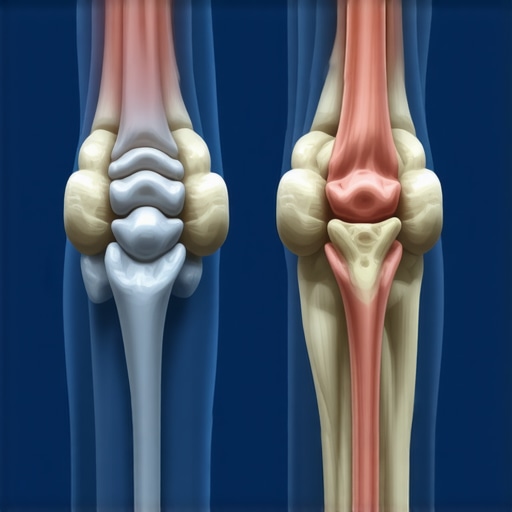
Can a Chiropractic Adjustment Really Fix My Brain Fog?
It sounds like a stretch, but the neurological link between your spine and your cognitive function is massive. When your upper cervical spine is misaligned, it can restrict optimal blood flow and affect the way your nervous system processes information. Many of my clients are shocked at how chiropractic adjustments can clear brain fog after a long week. It is not just about the bones; it is about the communication between your brain and your body. If you have ever felt ‘sluggish’ or ‘out of it’ while your back is out, it is not just in your head—it is in your neck.
Master the Nuance of Daily Alignment
Moving from a survival mindset to a thrive mindset requires more than just one-off fixes. You have to adjust your routine daily spinal alignments for lasting relief. It is about the small choices, like how you sit, how you breathe, and even the shoes you choose for a quick walk to the park. By focusing on master your mobility top strategies for moving without pain, you create a body that is resilient enough to handle the chaos of parenthood. Have you ever fallen into the trap of over-stretching or ignoring your footwear while trying to fix your back? Let me know in the comments.I used to think that once my back stopped ‘popping’ after the Leo-lift incident, I was in the clear. But maintenance is where the real work happens. I quickly learned that the truth about posture correctors and braces is that they are often just expensive crutches that don’t solve the root problem of muscle weakness. If you want a spine that survives the next decade of parenting and career demands, you have to look at your environment. For me, that started with my desk. I realized I was spending eight hours a day in a position that was undoing all my progress. I had to learn how to set up your home office on a budget for your back because throwing money at a thousand-dollar chair doesn’t help if your biomechanics are off. In fact, why your expensive desk chair might be giving you false sciatica is often down to poor thigh support and a lack of a proper footrest. I started using a firm yoga block under my feet, which is a key part of how to use a footrest to save your lower back at work.
Stop Trusting Your Fancy Office Chair
Most of us assume that ‘ergonomic’ means ‘safe.’ It is a marketing lie. Your chair is only as good as your posture within it. I found that if I didn’t apply the 2-inch rule for your laptop stand to save your neck from strain, I would still end the day with a burning sensation in my shoulder blades. By raising my screen just two inches, I kept my head over my shoulders, preventing that ‘text neck’ forward lean. This is the future of spine health: micro-adjustments rather than massive overhauls. In the coming years, I predict we will move away from static sitting entirely, favoring dynamic workstations that force the body to shift weight every few minutes.
How do I maintain my mobility when life gets busy?
The secret isn’t a 60-minute yoga class; it’s what Dr. Stuart McGill calls ‘spinal hygiene.’ In his clinical research at the University of Waterloo, he explains that the way you do the little things—like the proper way to lean over the sink while brushing your teeth—dictates your long-term success. If you round your back every morning to brush, you are essentially picking at a scab on your lumbar discs. You have to adjust your routine daily spinal alignments for lasting relief. This includes the car, too. I spent way too much time slouching in traffic before I mastered the proper way to sit in a car for long road trips. 
Your Bed is Your Best Friend or Your Worst Enemy
Recovery happens while you sleep, but if your pelvis is twisted for eight hours, you are starting the day in a deficit. Finding the best sleeping position for chronic si joint pain relief was the final piece of the puzzle for me. I used to wake up feeling stiff until I realized a pillow between my knees kept my spine neutral. It sounds simple, but it is part of a larger strategy to master your mobility top strategies for moving without pain. If you aren’t paying attention to the surface you spend a third of your life on, your progress will stall.
The Standing Desk Trap
I see people switching to standing desks and wondering why their heels and lower back now ache. It is because they haven’t learned the correct way to use a standing desk without hurting your feet. You cannot just stand still for four hours; you need an anti-fatigue mat or a small stool to rest one foot on periodically. I want you to try one thing today: Raise your computer screen so the top third of the monitor is at eye level. This small ‘2-inch rule’ shift can be the difference between a productive afternoon and a migraine. Give it a shot and let me know if you feel that immediate release in your neck tension.
Looking back at that Tuesday in the grocery store, I realize the ‘pop’ wasn’t just a physical injury—it was a message. It told me that I couldn’t keep treating my body like a disposable tool while my toddler, Leo, got heavier and more active by the day. After months of trial and error, I’ve found that true relief doesn’t come from a single stretch or a new chair; it comes from a complete shift in how we inhabit our own skin during the ‘in-between’ moments of our lives.
The One Truth About Spine Health That Most Parents Ignore
The hardest lesson I’ve learned is that your body doesn’t just care about your workout; it cares about your 23-hour routine. You can spend an hour in the gym, but if you spend the other 23 hours hiking your hip or slumping over a laptop, your back will stay in a state of high alert. I discovered that I needed mobility mastery simple exercises to relieve chronic back pain that I could do while Leo was playing with his blocks, rather than waiting for a ‘perfect’ time to exercise. Another lightbulb moment was realizing that pain is often a signal of compensation. If your back hurts, it might actually be your hips or ankles refusing to do their share of the work. Lastly, never underestimate the power of ‘spinal hygiene.’ The way you brush your teeth or reach for a coffee mug matters just as much as the weight you lift at the squat rack.
My Personal Toolkit for Keeping My Lumbar Safe
I don’t believe in expensive gadgets that promise a quick fix, but there are a few specific tools and habits I swear by to maintain my posture and mobility. First, I use a firm yoga block as a footrest under my desk; it’s a cheap way to keep my pelvis in a neutral position while working. Second, I’ve integrated a morning movement routine that lubricates your joints every single day before the kids wake up. It only takes five minutes, but it sets the tone for my nervous system. Third, I highly recommend keeping a copy of these unlock better back health effective posture tips for 2025 saved on your phone. Whenever I feel a twinge, I go back to these fundamentals to see what I’m neglecting. These aren’t just ‘resources’; they are my daily armor against the physical demands of parenthood.
Build a Spine That Can Handle Anything Life Throws Your Way
You don’t have to live in fear of the next ‘toddler meltdown’ or grocery store carry. By focusing on daily adjustments to alleviate back pain and improve posture, you are building a body that is resilient, adaptable, and ready for the future. It’s about being present for your children without the constant shadow of physical discomfort. If you ever feel stuck or need a more personalized approach to your alignment, don’t hesitate to reach out via our contact us page. Your journey to a pain-free life starts with the very next time you bend down to pick up a toy—do it with intention, use your legs, and remember to breathe. Which one of these ‘parenting posture’ mistakes—the hip hike or the ‘sucking in’—are you most guilty of making? Let me know in the comments below!