

I remember sitting at my desk three years ago, shaking my left hand like it had fallen asleep during a boring movie. I thought it was just poor circulation or maybe I’d hit my funny bone. I ignored that faint “fizzy” feeling for weeks, assuming my home office setup was fine and I just needed more caffeine. I was wrong. That tiny tingle was the first whisper of a pinched nerve that eventually left me unable to turn my head without wincing. If you’re feeling something “off” right now—whether it’s a buzz, a hum, or a faint numbness—you aren’t being dramatic. Your body is trying to warn you before the real fire starts. Today, I’m going to show you exactly how to catch these signs early so you don’t end up like I did: stuck on a heating pad for a month.
Your Body Never Lies But It Does Whisper
We often wait for a “pop” or a sharp “ouch” before we take action. But nerves are different. They don’t usually start with a bang; they start with a suggestion. My biggest mistake early on was treating my nerve issues like a simple muscle strain. I tried to “stretch it out” aggressively, not realizing that stretching when a nerve is compressed can actually irritate it further. According to the Mayo Clinic, nerve compression occurs when surrounding tissues, such as bones, cartilage, or muscles, apply too much pressure to a nerve. It is a mechanical issue that requires space, not just force. When I finally stopped pulling on my neck and started focusing on decompression, things changed. [IMAGE_PLACEHOLDER]
Is this just a normal ache or something that needs real attention?
It’s easy to dismiss a bit of heaviness in your arm or a “pins and needles” sensation as just a part of the daily grind. You might think, “Is it worth the hassle to check this out?” The truth is, that subtle “fizzy” feeling is your early warning system. I’ve seen people ignore tingling while sitting at their desk for months, only to have it turn into a permanent loss of grip strength. I once even tried self-adjusting to fix the problem, but I quickly learned the truth about why cracking your own neck feels good but harms you. If you catch it now, you can often fix it with simple daily adjustments rather than drastic medical interventions.
The Red Flags I Wish I’d Noticed Sooner
One of the weirdest signs I ignored was a “hot” sensation in my shoulder that didn’t feel like a sunburn. It felt like someone had spilled warm water on my skin, but nothing was there. This is a classic sign of nerve irritation called paresthesia. If you are noticing that your upper back burns after using a mouse, it might not just be your muscles being tired. It could be your nerves losing their “glide” within the tissue. Have you ever felt a persistent “buzzing” in your limbs that just won’t go away no matter how many times you stretch? Drop a comment below if you have—I want to know where you’re feeling it. We need to look at posture correction secrets that actually respect the space your nerves need to breathe before the symptoms get worse.Once I realized my neck wasn’t just stiff but actually strangling a nerve, I stopped the aggressive static stretching. I remember a Tuesday morning when I couldn’t even lift my coffee mug without a lightning bolt shooting down my arm. Instead of pulling on my head in frustration, I tried the quick nerve glide for instant relief from carpal tunnel symptoms, applying the same principle to my neck. Within three reps, the fizz in my fingers calmed down. This is called nerve flossing, and it is the most important tool in your kit.
Help Your Nerves Slide and Glide Again
Think of your nerve like a thread inside a straw. If the straw is bent or filled with debris, the thread can’t move. Nerve glides pull that thread back and forth gently to clear the path. You don’t want to stretch the nerve—nerves actually hate being stretched—you want to glide it. When you stretch a nerve, you pull on both ends, which can cut off its blood supply. When you glide it, you create slack at one end while pulling at the other. This mechanical movement helps pump out inflammation and restores the nerve’s natural mobility.
The 2-Inch Rule to Save Your Neck
Your head weighs about as much as a bowling ball. For every inch it tilts forward, it effectively doubles the pressure on your discs. I used to stare down at my laptop for hours until I implemented the 2-inch rule for your laptop stand to save your neck from strain. It sounds too simple to work, but lifting that screen just a few inches changes the entire mechanical load on your cervical spine. If you can’t get a professional stand today, stack some old textbooks under your monitor. This prevents the forward-head posture that pinches the nerves at the base of your skull.
Why You Must Move Every Thirty Minutes
I used to take pride in powering through four-hour deep-work sessions, but my back didn’t share my enthusiasm. Now, I set a timer because why your spine needs movement every 30 minutes is a non-negotiable law of biology. When you stay still, the fluid in your discs stops circulating, and metabolic waste products build up, causing that heavy, stiff feeling. Even doing the wall angel move that reverses a day of hunching over a phone for just ten seconds can reset your system and give your nerves the space they need to breathe.
Support Your Feet to Save Your Back
Most people focus on the chair, but they completely forget their feet. If your feet are dangling or tucked under your seat, your pelvis tilts backward, and your lower back takes the hit. Learning how to use a footrest to save your lower back at work was a total game-changer for my periodic sciatica. A footrest keeps your hips at a slightly higher than 90-degree angle, which prevents the constant pull on your lower lumbar nerves. If you want to master your mobility, you have to stop the mechanical friction before it starts.
You’ve probably heard a dozen times that “core strength” is the holy grail for back relief. I used to believe it too, spending hours on planks and crunches. But here’s the contrarian truth: a rock-hard core that is constantly “on” can actually act like a straightjacket for your spine. Dr. Stuart McGill, a leading expert in spine biomechanics, emphasizes that spinal stability isn’t about maximum strength, but about “stiffness” that is timed and coordinated. If your muscles are always tight, your joints never get to move through their natural range, leading to that chronic, “stuck” feeling. Have you ever fallen into this trap of over-bracing your core? Let me know in the comments.
The dangerous habit of “sucking it in” for posture
One of the biggest “oops” factors I see is the aesthetic habit of belly-sucking. We want to look thinner or feel more supported, so we pull the navel toward the spine. However, why you should stop sucking in your stomach to look thinner is because it completely disrupts your natural breathing pattern. When you suck in, you can’t use your diaphragm effectively, forcing your neck and chest muscles to take over the job of breathing. This is a primary reason how a tight jaw leads to chronic upper neck pain—it’s a mechanical chain reaction starting from your abdomen and ending at the base of your skull. 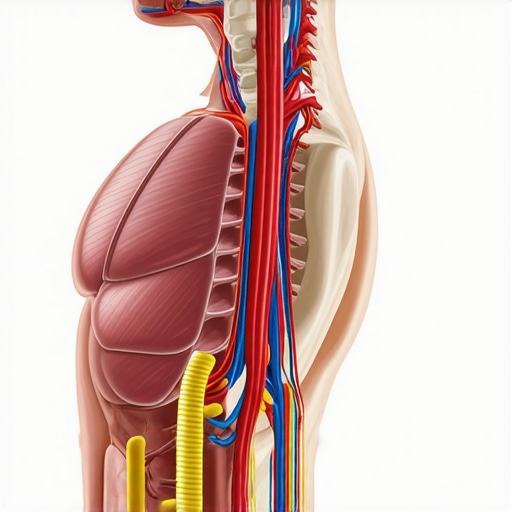
Why does my back still hurt even though I have a strong core?
It is frustrating to work out daily and still feel like your spine is made of glass. The problem is often that why your core strength isn’t stopping your back aches relates to movement quality rather than sheer force. You might have strong abs but poor “proximal stability.” This means your brain doesn’t know how to keep your spine still while your hips and shoulders move. For example, why your hips lock up after a 20-minute walk is often a sign that your lower back is doing the work your glutes should be doing. True health comes from dissociation—the ability to move one joint without the other one having to compensate.
Are you actually mobile or just flexible?
People often confuse flexibility with mobility. Flexibility is the passive length of a muscle; mobility is your ability to control that muscle through a range of motion. I’ve seen hyper-flexible yogis who can do the splits but have constant lower back pain because they lack stability. Often, the root cause is far from where the pain is. For instance, how a stiff big toe is causing your chronic lower back pain is a classic example of how a lack of mobility at the ground level forces the spine to over-rotate. If you’ve recently started professional care, why you feel wobbly after your first adjustment is simply your nervous system recalibrating to these new, correct signals. To truly master your mobility, you must address these hidden mechanical links rather than just stretching where it hurts.
Maintaining the gains you make through mobility work isn’t about doing an hour of yoga every Sunday; it’s about the invisible infrastructure of your day. For me, that meant moving beyond just ‘trying harder’ to sit up straight and actually investing in a few pieces of gear that do the heavy lifting for me. I’m a huge fan of the gas-spring monitor arm. Why? Because the ability to adjust your screen distance—not just height—stops you from doing the ‘turtle neck’ reach toward your pixels. This is the ultimate way to unlock better back health without thinking about it. I also swear by a firm, angled footrest. It sounds like something for an old man, but how to use a footrest to save your lower back at work is really about pelvic positioning. It shuts off the overactive hip flexors that scream at you after a long day. If you’re serious about mastering your mobility, you have to curate your environment to favor your anatomy. 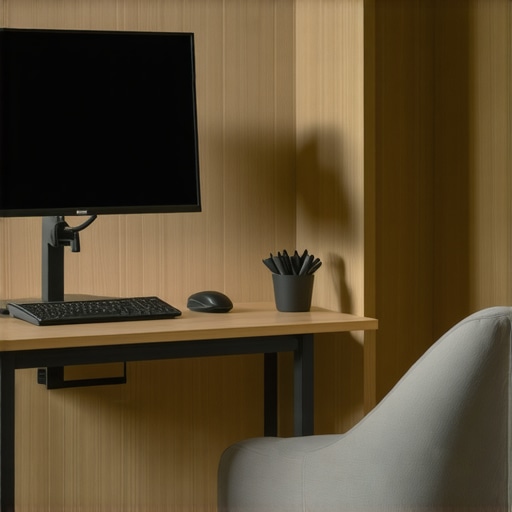
Is there a simple way to keep your spine happy?
The secret is ‘movement snacks.’ Dr. Kelly Starrett, author of Becoming a Supple Leopard, often talks about how our tissues need frequent, small inputs to stay healthy. I’ve integrated this by using a simple tool like Stretchly, a break timer that forces me to do a 30-second reset every 25 minutes. Even the 30-second wall slide for instant shoulder relief can prevent your upper back from locking up. Looking ahead, I predict we’re going to see a massive shift toward bio-responsive furniture. Imagine a chair that vibrates slightly when it detects your lumbar spine is slumping or a desk that automatically raises an inch when your heart rate indicates stress-induced tension. Until that tech is affordable, though, we have to be our own sensors.
Build a workstation that does the work for you
If you’re still working from a laptop on your kitchen table, you’re playing a dangerous game with your cervical discs. You need to follow the 2-inch rule for your laptop stand to save your neck from strain. It’s the highest ROI change you can make today. I also recommend looking into the best way to transition from sitting to standing to ensure you aren’t just trading one static posture for another. This constant variation is what keeps your tissues hydrated and responsive.
Where spinal care is headed in 2025
Consistency is the only thing that beats gravity. You can have the best chiropractor in the world, but if you don’t adjust your routine, you’ll be right back where you started. My challenge to you: pick one tool—be it a footrest, a monitor arm, or a timer—and commit to it for one week. Your future self will thank you for the lack of ‘fizz’ in your fingers. Try the wall angel move that reverses a day of hunching over a phone right now to see how much tension you’re actually holding and reset your baseline before your next task.
The Hardest Lessons I Learned While Chasing Lasting Relief
One of the most profound lightbulb moments in my journey was realizing that nerves are like high-maintenance houseguests—they don’t want to be forced into anything. If you try to bully a nerve into submission through aggressive stretching, it will only scream louder. I finally understood that space is the ultimate healer. When you stop the mechanical friction, the body’s natural healing takes over. Also, I learned that the truth about why cracking your own neck feels good but harms you is all about temporary endorphins masking a deep-seated stability problem. True progress is often boring; it is the small, daily spinal alignments that actually stick over time.
My Personal Toolkit for Spine Resilience
If you are wondering where to start, here is what actually worked for me after years of trial and error. First, Stretchly is a free, open-source break timer that saved my focus by forcing me to move every 20 minutes. Second, the book Becoming a Supple Leopard by Dr. Kelly Starrett is an incredible resource—it taught me how to master your mobility without needing a medical degree. Lastly, using a simple lacrosse ball for trigger point release is the most underrated tool for keeping my tissues supple between work sessions. [IMAGE_PLACEHOLDER_FINAL]
Your Blueprint for a Fizz-Free Future
You do not have to live with that fizz in your fingers or the burn in your shoulders forever. The human body is remarkably resilient when you stop working against its mechanical design. By making these small environmental shifts, you can unlock better back health and get back to the activities you love without the nagging fear of a sudden twinge. Start small, stay consistent, and listen to the whispers of your body before they become shouts. Have you ever noticed a strange sensation like fizzing or buzzing in your hands after a long day at the desk? Let me know in the comments where you feel it most!