
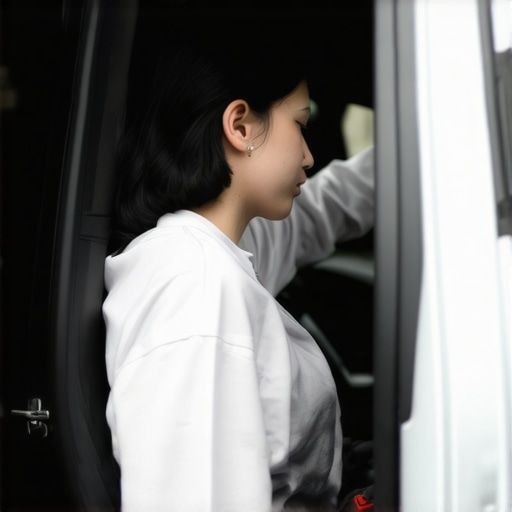
I was just reaching for my laptop bag in the back seat. One quick twist, a sickening pop, and suddenly I was looking at three days of frozen peas on my lower back and a very expensive trip to the clinic. We have all been there. You are in the driver’s seat, you realize your phone or a grocery bag is just an inch too far behind you, and you perform a seated gymnastic move that would make a professional contortionist wince. I used to think my back was just getting old—what a load of nonsense. The truth is, I was treating my spine like a swivel chair that did not actually swivel. It was a cold, rainy Tuesday, and I did not want to get out of the car to grab my gym bag. That one choice led to a week of walking like a question mark. Today, I am going to show you exactly how to navigate that reach without needing a week of bed rest. We are going to dive into the physics of the seated twist and why your current habit is a ticking time bomb for your discs. Have you ever felt that sharp, oh no twinge while reaching for a bag in the back?
Your Car Seat is Secretly Plotting Against Your Spine
Most of us do not think twice about how we move once we are buckled in. We plant our feet, keep our hips glued to the seat, and rotate our ribcage a full ninety degrees. It is a recipe for disaster. My biggest mistake early on was assuming that if I could reach it, I should reach it. I ignored the warning signs, like why my neck crunches when I look over my shoulder, and kept pushing my range of motion until something gave way. I thought I was being efficient, but I was actually just putting 50 pounds of torque on my L5-S1 joint. If you have already mastered the best way to get into a car if you have back pain, you are halfway to a healthier spine, but reaching back is a different beast entirely.
Is it actually worth the hassle to move your seat?
You might think it is faster to just grab and go, but the cumulative stress is real. Skeptics often tell me they have been reaching into the back seat for twenty years without a problem. My answer is always the same: you have been lucky, not correct. According to a study published in the Journal of Physical Therapy Science, the combination of trunk rotation and flexion significantly increases intradiscal pressure, making this common movement one of the most dangerous for your lumbar health. [image] Real back health tips for 2025 focus on this kind of functional movement awareness.
Why the Pivoting Hip Method Changes Everything
The secret lies in your hips, not your waist. When you reach back, you should not be twisting your spine like a wet washcloth. Instead, you need to unweight your hip and let your entire torso move as one solid unit. I learned this the hard way after months of daily adjustments to alleviate back pain. By shifting your weight and opening the car door if necessary, you preserve the natural alignment of your vertebrae. Think of your spine as a stack of expensive porcelain plates; you would not twist the middle of the stack, would you? We need to treat our bodies with that same level of respect. This shift in perspective is about more than just avoiding a twinge; it is about the proper way to sit in a car for the long haul. Let us get into the step-by-step mechanics that will save your discs and your dignity.
Master the Hip-Pivot to Protect Your Discs
The most dangerous part of a seated reach is the torque. Think of your spine as a thick rubber band that is being pulled in two directions while also being twisted; eventually, the fibers start to fray. To prevent this, you must stop treating your waist as a hinge. The real secret is to unweight one side of your pelvis. I call this the glute-lift. Before you even think about extending your arm, shift your weight onto your left hip if you are reaching toward the right. This allows the pelvis to rotate with the ribcage, keeping the entire spine in a neutral, safe block. Learning the simple pelvic tilt that makes sitting for hours painless is the foundation for this move. If your pelvis cannot move, your L5-S1 joint has to take the brunt of the force.
Lift Your Weight Before You Reach
Last month, my toddler dropped her favorite toy into the rear footwell while I was parked. My instinct was to lunge and grab it. Instead, I consciously lifted my right buttock off the seat, used my left arm on the center console for support, and turned my whole body as if I were a lighthouse rotating on its base. By moving as one unit, I avoided that sharp, shearing force that usually triggers a week of stiffness. This is part of how you adjust your routine for daily spinal alignments. If you feel any grabbing in your lower back, you haven’t shifted your weight far enough. You want your belly button to point toward the item before you reach for it.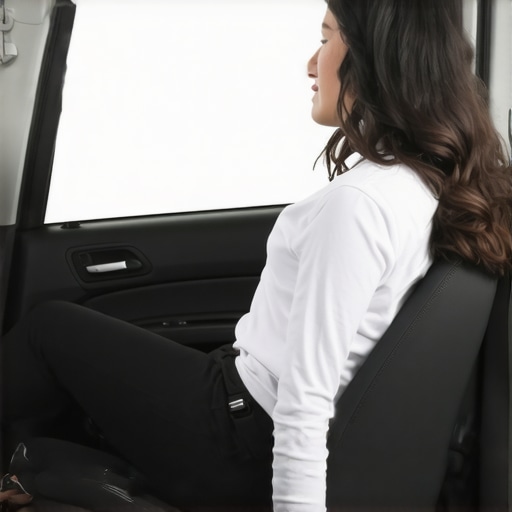
The Golden Rule of T-Rex Arms
Once you have pivoted your torso, the next mistake is over-extending the arm. When you reach far away from your body, the weight of the object—even something light like a laptop bag—is multiplied by the length of your arm. This is basic physics: a five-pound bag feels like fifty pounds when your arm is fully locked out. Use T-Rex arms by keeping your elbow as close to your ribcage as possible for as long as possible. Drag the item toward you instead of lifting it immediately. This mimics the mechanics of how to pick up a heavy box without feeling it in your spine the next day. By keeping the load close to your center of gravity, you utilize the deep core connection that stops your spine from shear stress.
Stop Reaching Over the Console
If the object is on the floor behind the passenger seat and you are in the driver’s seat, stop trying to be a hero. The center console is a physical barrier that forces your spine into a C shape while you twist—the absolute worst position for disc health. If you can’t reach it with a simple hip pivot, you must get out of the car. It takes ten seconds to step out and open the back door, which is far better than ten days of physical therapy. Real mastery of your mobility means knowing the limits of your environment. For those who frequently travel, integrating the best stretching routine for frequent travelers can help keep the tissues around the hips supple enough to make these pivots feel natural rather than forced.
The Three-Point Brace Technique
Whenever you are reaching into the back, always have three points of contact. If you are reaching with your right hand, your left hand should be firmly planted on the steering wheel or the passenger seat headrest, and both your feet should be positioned to support your weight shift. This bracing creates a corset effect for your spine. It is the same principle used when people transform back pain outcomes through posture correction. Without that brace, your back muscles have to do all the work of stabilizing you in an awkward position. By using the car’s interior as a tool, you take the load off the small stabilizers in your spine and put it onto your larger, stronger limb muscles.Let’s dig deeper into why that ‘tight’ feeling persists even after you’ve spent twenty minutes on a yoga mat. One of the biggest myths I encounter is the idea that more flexibility always equals less pain. In reality, stretching a muscle that is already over-lengthened is like pulling on both ends of a frayed rope. I used to fall for this constantly. Every time my back felt stiff, I would go for a deep hamstring stretch. Little did I know, why stretching your hamstrings might be making your back pain worse is a reality for thousands of people with desk-bound jobs. When your pelvis is tilted, your hamstrings are already under tension; stretching them further just destabilizes your lower back even more.
Are you accidentally stretching your nerves instead of your muscles?
This is a nuance that even many seasoned athletes miss. That ‘stiff’ sensation isn’t always muscular. Often, it is neural tension—your nerves are physically caught or compressed, and they are reacting by sending a tightness signal to the brain. If you try to power through this with aggressive stretching, you are literally tugging on your nervous system. According to research in the Journal of Orthopaedic & Sports Physical Therapy, aggressive stretching in the presence of neural sensitivity can actually exacerbate inflammation and delay healing. This is why why stretching your psoas might actually be making your back hurt more if the underlying issue is nerve-related. Instead of pulling, you need to learn to ‘glide’ those nerves.
The Trap of Sucking in Your Stomach
We’ve been told for decades to ‘suck it in’ for better posture, but this is a massive ‘oops’ factor. When you suck in your stomach, you are actually inhibiting your diaphragm and creating a pressurized tube in your torso that doesn’t allow for natural movement. This is a far cry from a true deep core connection that stops your spine from shear stress. Real stability comes from intra-abdominal pressure, not from making your waist look smaller. In fact, why you should stop sucking in your stomach is one of the first things I teach patients who can’t figure out why their ‘core work’ isn’t stopping their backaches. 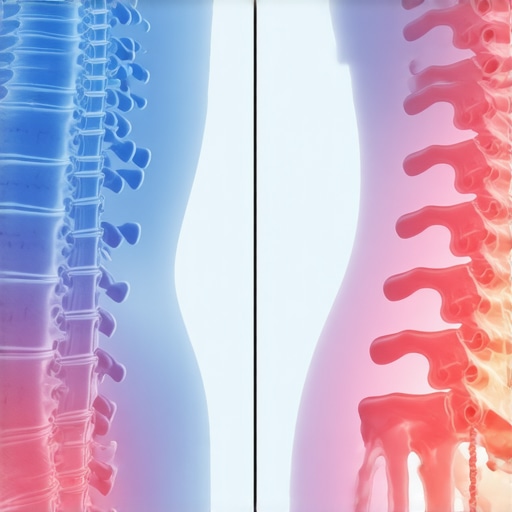
Why Self-Cracking Only Provides a Temporary High
It’s tempting to just ‘pop’ your own back or neck when you feel that pressure build-up. We all know that satisfying sound. But there is a hidden danger here: you are usually cracking the segments that are already too loose (hypermobile) while the stuck segments stay stuck. This is the truth about why cracking your own neck feels good but harms you in the long run. You’re essentially creating more instability in the joint. Professional daily adjustments to alleviate back pain target the specific, restricted joints rather than the ones that are already moving too much. Have you ever fallen into the trap of constant self-cracking? Let me know in the comments.
How do I maintain my spinal alignment for the long haul?
I get this question every time I show someone the hip-pivot method. Consistency is where most people fail. You do it correctly for three days, your back feels great, and then you get a stressful phone call while pulling into a parking lot and—snap—you’re back to your old twisting habits. Maintaining a pain-free life isn’t about one massive overhaul; it’s about the micro-adjustments you make when no one is watching. I treat my movement patterns like a bank account. Every time I move well, I’m making a deposit. Every time I twist lazily, I’m making a withdrawal. To keep the balance in the black, you need to adjust your routine for daily spinal alignments so they become second nature. This involves more than just thinking about the car; it’s about how you unlock better back health with effective posture tips for 2025 throughout your entire day.
Ditch the expensive chair and buy a footrest instead
Most people think a $1,200 ergonomic chair is the cure-all. I’ve owned them, and honestly? They often provide a false sense of security that leads to slouching. If I had to recommend one specific tool for long-term spinal maintenance, it’s a simple, adjustable footrest. When your feet are firmly planted and slightly elevated, it automatically tilts your pelvis into a neutral position. I personally found that using a footrest to save your lower back did more for my disc health than any lumbar cushion ever did. If you’re a traveler, don’t overlook the basics. I always keep a small, firm foam roll in my trunk. Placing it just above the beltline during long drives prevents that ‘tailbone tuck’ that makes reaching into the back seat so dangerous in the first place. 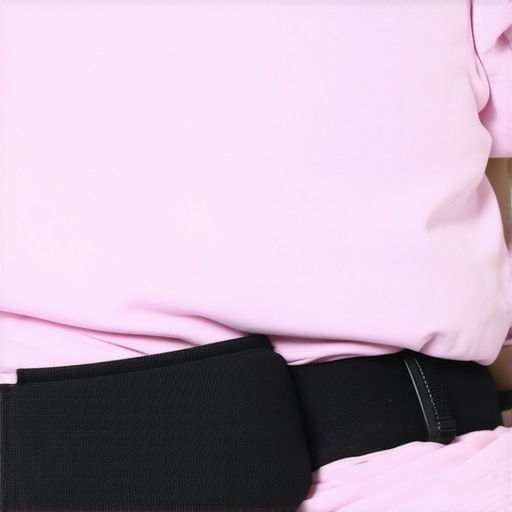
AI sensors will soon be your new posture coach
Looking ahead, I predict we are moving away from passive furniture and toward active biofeedback. We are already seeing the rise of wearable sensors that vibrate when your spine enters a high-shear position. These tools will eventually be integrated into our car seats and office chairs, providing real-time data on our ‘movement hygiene.’ This is a huge win for mastering your mobility because it removes the guesswork. However, until your car can tell you that you’re twisting incorrectly, you have to be your own sensor. According to the principles laid out by Dr. Stuart McGill, a leading expert in spine biomechanics and author of Back Mechanic, the goal of any tool or exercise should be to foster ‘stiffness’ in the core while allowing ‘mobility’ in the extremities. This ‘stiffness’ is what protects your discs when you reach for that grocery bag.
Take the 30-second challenge before your next drive
If you want to see immediate results, don’t wait for a gadget. I want you to try one specific advanced tip today: the ‘Wall Reset.’ Before you get into your car for your evening commute, find a flat wall. Stand with your heels, glutes, shoulders, and head touching the surface. Hold it for 30 seconds while breathing deep into your belly. This simple 30-second wall reset for hunchback posture recalibrates your nervous system, making it much harder for your body to default into a dangerous slouch. Once you’re in the driver’s seat, remember the 2-inch rule—not just for laptop stands, but for your headrest too. Keep that spine stacked, keep the ‘T-Rex arms’ ready, and stop treating your back like it’s invincible.
Lessons My Body Taught Me While I Was Stuck on the Floor
Reaching into the back seat is a tiny, mindless moment that can have massive consequences. Looking back at my own journey, there are a few lightbulb moments that changed everything for me. First, I realized that true mobility mastery isn’t about how far you can bend, but how well you can stabilize the parts of your spine that shouldn’t be twisting in the first place. Second, I learned that daily adjustments to alleviate back pain aren’t just for the days you’re hurting; they are an insurance policy for when life gets chaotic and you’re in a rush. Finally, I stopped ignoring the ‘little’ signals. If a movement feels ‘sketchy’ or tight, it probably is. I started prioritizing moving without pain over moving quickly, and that shift in mindset was the ultimate game-changer.
Where I Turn for Reliable Spinal Advice
For anyone serious about maintaining their physical freedom, I have a few specific recommendations. I can’t speak highly enough of the practice of simple exercises to relieve chronic back pain which act as a reset for your nervous system. For those who work at a desk, I strongly suggest using a footrest to save your lower back, as it prevents the slump that makes car-reaches so dangerous later. And of course, I always keep an eye on the latest back health tips for 2025 to ensure my habits are backed by current science. I trust these resources because they focus on the core mechanics of the human body rather than quick-fix gimmicks.
Your Path to a More Resilient Back Starts Now
You deserve to drive, reach, and live your life without that nagging fear of a sudden, debilitating back spasm. By committing to these small, daily spinal alignments, you are giving your future self the gift of lasting mobility. It is not about being perfect; it is about being mindful enough to protect your spine one movement at a time. Let’s reclaim your posture and keep your back healthy for the long haul. Have you ever experienced that sudden, sharp pain while reaching for a bag in the car? Let me know your story in the comments below.