
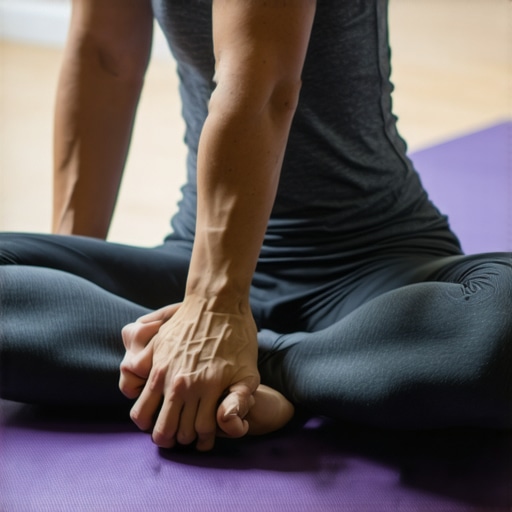
I remember sitting on a hard wooden floor at a friend’s housewarming party three years ago. Everyone was gathered in a circle, knees tucked in, looking perfectly comfortable. I tried to do the same, and bam—a sharp, pinching sensation shot through the front of my right hip. It felt like someone had stuck a jagged piece of Lego in the joint and then tried to force the door shut. I spent the next hour awkwardly shifting, pretending I just preferred sitting with my legs straight out while everyone else looked like a serene statue. It was embarrassing, painful, and frankly, it made me feel a lot older than I actually am. Today, I’m going to share why that “bite” happens and how you can stop fighting your own skeleton so you can finally sit on the floor without a grimace.
That Sharp Bite in Your Groin Is Not Just Tightness
For the longest time, I assumed my hips were just “tight.” I figured if I just hammered away at them with enough pigeon poses, they’d eventually surrender. That was my first big mistake. In fact, I spent months aggressively yanking on my knees, which only made the pinching worse. What I didn’t realize back then was that the pain wasn’t coming from a muscle that needed lengthening; it was coming from the bones of my hip joint literally running out of room. When you try to sit cross-legged and feel that immediate “stop,” you’re often experiencing something called bony impingement. If you’ve ever noticed how your hips lock up after a 20-minute walk, you know exactly how frustrating that lack of space can be.
Is My Hip Bone Actually Hitting Something?
It sounds scary, doesn’t it? The idea that your bones are crashing into each other. But for many of us, the shape of our hip socket or the neck of the femur isn’t a perfect 1:1 match for deep rotation. According to the Hospital for Special Surgery, Femoroacetabular Impingement (FAI) is a very common condition where extra bone grows along the joint, creating an irregular shape that causes friction. This doesn’t mean you’re “broken,” but it does mean that standard stretching is going to fail you every single time. Have you ever felt that sharp “catch” in your groin when you pull your knee to your chest?
Stop Pulling on Your Knees Before You Make It Worse
If you’re like I was, your instinct is to pull harder. You think, “If I just get past this one spot, it’ll release.” Please, stop doing that. When you feel a pinch, your body is sending a clear “no entry” signal. Forcing it just inflames the labrum—the soft ring of cartilage that lines your hip socket. Instead of brute force, we need to look at expert tips for easier movement in 2025 that focus on creating space in the joint rather than just pulling on the ropes. I finally found relief when I stopped the traditional stretches and started using the single best move for releasing tight hip flexors that actually addresses the joint position. You might even find that you need to learn how to release your hip flexors without stretching them at all. Understanding the “why” behind the pinch is the first step toward moving like a human being again, and in the next section, we’re going to get into the literal nuts and bolts of how to fix your seated posture.
Stop Crowding the Front of Your Hip Socket
To fix that sharp bite in your hip, we have to talk about joint centration. Imagine your hip socket as a bowl and the head of your femur as a ball. When you sit cross-legged, the ball needs to roll and glide smoothly within that bowl. If your femur is jammed too far forward, it hits the front edge of the socket—the labrum—and that’s where the pinch comes from. I used to think I just needed to stretch my hamstrings, but I was actually ignoring the fact that my thigh bone was literally in the wrong neighborhood. To get it back where it belongs, you need to learn how to release your hip flexors without stretching them. By relaxing the overactive muscles in the front, you allow the bone to sit deeper in the socket, creating the clearance you need for rotation.
Nudge Your Femur Back to Create Instant Room
One of the most effective ways to stop the pinch is to provide a ‘posterior glide.’ I remember being in a cramped hotel room in Chicago before a three-day movement seminar. My hips were screaming from the flight, and I knew I couldn’t sit through eight hours of lectures. I took a heavy suitcase strap, looped it around the leg of the bolted-down desk, and stepped my right leg through it. I let the strap pull the very top of my thigh bone backward while I gently moved my hip through a range of motion. It felt like someone had finally oiled a rusty hinge. This is essentially the one move that fixes a tight psoas muscle by resetting the joint position rather than just yanking on the muscle fibers. 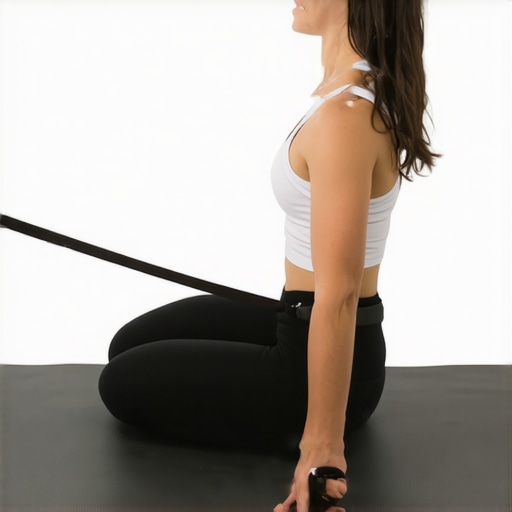
Why Your Pelvic Tilt Is Sabotaging Your Sit
Most of us live in a state of anterior pelvic tilt—where the top of the pelvis spills forward like a bowl of water tipping over. This position pre-closes the hip joint, meaning you run out of room for your leg to move before you even start to sit down. You might also notice why your knees hurt when you have a pelvic tilt, as the entire kinetic chain is forced to compensate for that lack of hip space. To fix this, you have to practice ‘tucking’ your tailbone slightly as you descend to the floor. Think of it as creating a flat back to give the femur more runway. This adjustment is one of the master your mobility top strategies for moving without pain because it addresses the foundation of the movement rather than just the symptoms.
Breathe Into Your Lower Back to Melt the Tension
It sounds crazy, but your breath dictates how much your hips will let you move. When you hold your breath or breathe shallowly into your chest, your pelvic floor and hip rotators lock up in a protective reflex. I found that if I focused on how to breathe into your lower back to release tension, my hips would naturally ‘open up’ without me having to force them. This deep, 360-degree expansion pushes against the internal structures of the pelvis from the inside out, creating space that no external stretch can reach. If you struggle with this, it’s often a sign of why your glutes go to sleep after one hour of sitting; the lack of blood flow and neurological input makes the whole area feel like a dead zone. By combining this internal pressure with the joint resetting techniques, you change the environment of the hip entirely.
The Core Strength Myth That’s Actually Locking Your Hips
Most people are told that the secret to pain-free living is a rock-hard core. We’re taught to ‘brace’ our midsections as if someone is about to punch us, especially when we’re trying to move or sit on the floor. But here is the contrarian truth: over-bracing is one of the primary reasons your hips feel like they’re made of concrete. When you chronically tighten your abdominals, you create a rigid cylinder that limits the natural ‘sway’ and rotation the pelvis needs to accommodate the femur. This is why your core strength isn’t stopping your back aches—in fact, it might be the very thing pinning your hip joints in a compromised position. Have you ever fallen into the trap of trying to hold your stomach in all day? Let me know in the comments.
Can Too Much Stability Actually Limit Your Range of Motion?
It sounds like a paradox, but high-level athletes often struggle with the same pinch you felt at that housewarming party. A study published in the Journal of Biomechanics suggests that excessive trunk stiffness can actually increase the load on the hip joint by preventing the spine from sharing the mechanical burden. When your trunk is too stiff, your hips have to work overtime to compensate for the lack of movement above them. This is where most people hit a wall; they try to build more strength on top of a joint that already lacks the ‘permission’ to move. To get past this, you need to look at master your mobility top strategies for moving without pain that focus on fluidity rather than just isometric tension. 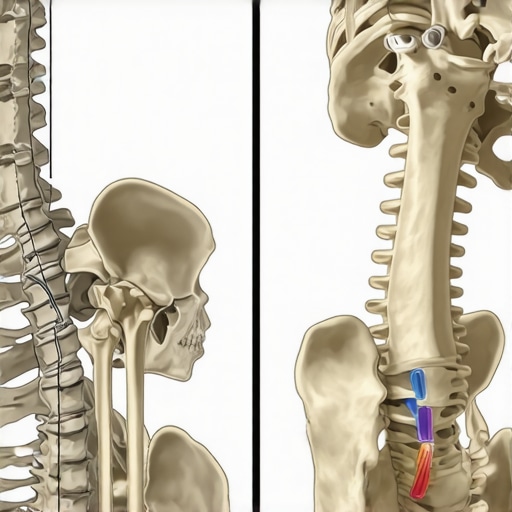
Beware the Trap of Aggressively Rolling Your Tissues
Here is the ‘oops’ factor I see every single week: the person who spends twenty minutes a day agonizingly rolling their IT band or psoas. If your brain perceives the hip joint as unstable because the bones aren’t centered, it will ‘clamp’ the surrounding muscles to provide artificial stability. No amount of rolling will fix a neurological clamp. In fact, the truth about foam rolling your IT band is that you’re often just irritating a structure that is already under too much tension. Instead of attacking the muscle, we should be inviting the nervous system to let go. This starts with how you use your diaphragm. Learning how to breathe using your belly to lower spinal tension is far more effective than a foam roller because it signals to your brain that the ‘threat’ is gone. When the brain feels safe, it releases the muscular ‘brakes’ that are causing that sharp bite in your groin. You don’t need more force; you need better communication with your own nervous system to enhance your mobility for the long haul.Maintenance isn’t about doing a grueling 90-minute yoga session every morning—I certainly don’t have time for that. It’s about the micro-wins. For me, the game-changer was incorporating daily adjustments to alleviate back pain and improve posture into my morning coffee routine. While the kettle boils, I do a quick standing hip shift to ensure I’m not hanging off my ligaments. This is part of the morning movement routine that lubricates your joints and sets the tone for the rest of the day. If you don’t own a simple firm yoga block or a small wedge, get one. I use a wedge to elevate my heels during squats, which allows my pelvis to stay upright and prevents that ‘butt wink’ that causes lower back flare-ups. According to the International Journal of Sports Physical Therapy, using external cues like a wedge can significantly reduce compensatory movement patterns in the lumbar spine.
How do I maintain my hip mobility without making it a full-time job?
Consistency beats intensity every single time. I used to go hard for three days and then quit for two weeks because my hips were sore. Now, I use the 10-second posture check to do every time you check your phone as a trigger. It’s about building a ‘map’ in your brain of where your hips are in space. I also make it a point to fix your posture while washing dishes by alternating which leg I put my weight on. This keeps the pelvic floor from getting stuck in one ‘favored’ position. 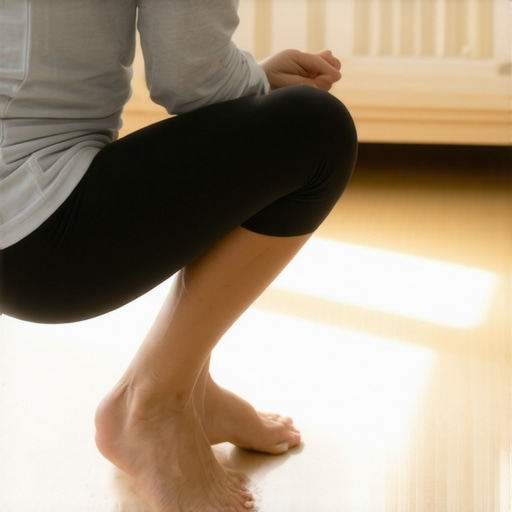
The Future of Posture Is About Feel Rather Than Force
I suspect that in the next few years, we’ll move away from the ‘hacks’ and toward real-time biofeedback. Instead of wearing a restrictive brace—and you can read the truth about posture correctors and braces to see why they often fail—we will likely use haptic wearables that gently vibrate when our deep core goes ‘offline.’ This shift focuses on effective posture tips for 2025 that prioritize neurological retraining over mechanical support.
Take the Two-Minute Challenge Tonight
If you want to start seeing long-term results, I want you to try one specific thing tonight. Before you sit on the couch, perform the single best move for releasing tight hip flexors for exactly sixty seconds per side. Don’t push into the pinch. Just breathe. If you want to dive deeper into this, check out our expert tips for easier movement in 2025 to refine your form even further. You’ve already done the hard work of understanding the ‘why’; now let’s make the ‘how’ a permanent part of your life.
The Hardest Lessons My Hips Taught Me
Reflecting on my journey from that painful housewarming party to sitting comfortably today, a few things stand out. First, I learned the difference between muscle soreness and a misaligned vertebra—knowing when to push and when to back off is half the battle. Second, your bone structure isn’t a life sentence; it’s just a set of blueprints you need to work around. Third, if you ignore why your hips lock up after a 20-minute walk, you’re missing the early warning signs of joint crowding. Lastly, I realized that forced flexibility is a myth; real range comes from the brain feeling safe enough to let the muscles relax.
#IMAGE_PLACEHOLDER_E#
The Daily Toolkit That Keeps Me Off the Floor
I don’t leave my mobility to chance anymore. My hip survival kit includes a firm yoga block, a 10-degree squat wedge, and a simple tennis ball. I highly recommend checking out master your mobility top strategies for moving without pain for a breakdown of how to use these tools effectively. I also rely on a morning movement routine that lubricates your joints every single day without fail. These aren’t just gadgets; they are physical cues that help my nervous system remember where my center is, even when I’m tired or stressed.
Your Future Without the Bite
It is easy to feel like your body is failing you when you can’t even sit on the floor, but that sharp pinch is just a request for more space. By prioritizing joint centration and better breathing, you can reclaim your freedom of movement. To take the next step, explore these expert tips for easier movement in 2025 or contact us if you need a more personalized path. You don’t have to fight your skeleton anymore—you just have to learn to listen to it. Do you feel that sharp pinch on one side more than the other? Let me know in the comments below.