

I reached for my water bottle in the passenger seat and felt that sharp, familiar ‘zap’ across my lower back. Just two hours earlier, I had been standing triumphantly at the summit of a 4,000-footer, feeling like an invincible mountain goat; now, I was moving with the grace of a rusty lawn chair. I spent years thinking this ‘hiker’s back’ was just the unavoidable price of admission for loving the outdoors. I’d limp into work on Monday morning, clutching my coffee and blaming my groans on the ‘good miles’ I’d put in. But here’s the truth I finally learned after one too many nights spent on a heating pad: your spine isn’t failing you, but your recovery strategy almost certainly is.[image placeholder]
Stop treating your spine like a pack mule
For the longest time, I made the classic mistake of thinking that if I just toughened up and pushed through, the pain would eventually disappear. I would cinch my pack’s waist belt as tight as a Victorian corset and wonder why my hips felt like they were cast in concrete by the time I hit the parking lot. The reality is that long trail days place an incredible amount of ‘shear stress’ on your vertebrae, especially when you’re navigating technical terrain. According to the Journal of Orthopaedic & Sports Physical Therapy, repetitive loading while the stabilizer muscles are fatigued significantly alters your gait, which shifts the structural burden away from your muscles and directly onto your joints. This transition is why you feel fantastic at mile three, but like a hunchbacked gargoyle by mile twelve.
If you’ve ever wondered how to carry a heavy backpack without slumping, you’re already halfway to the solution. Distribution of weight is everything. But even the most expensive, ergonomic pack won’t save your lumbar if you don’t know how to decompress once the boots come off. One of the biggest mistakes I made for years was going straight from the trailhead into a two-hour car ride. That is essentially a recipe for spinal disaster. My lower back would lock up in that seated position, and by the time I pulled into my driveway, I could barely stand up straight to unload my gear. I eventually realized that sitting in a car for long road trips right after a hike was actually undoing all the metabolic benefits of the mountain air. Your joints need blood flow and movement to flush out inflammation, not to be compressed into a bucket seat immediately after a 10-mile slog.
Is that post-hike stiffness actually permanent?
It feels like it, doesn’t it? That deep, dull ache that makes you feel twenty years older than you are can be incredibly discouraging, especially when it starts to bleed into your work week. But I promise you, it isn’t a life sentence or a sign that you need to hang up your boots. Today, I’m going to share the exact neighborly advice and routine I use to ‘reset’ my system the moment I get back to the trailhead. We’re going to talk about why your hips are the secret key to unlocking your back and why stretching your psoas might be the very thing making your back feel worse right now. Have you ever had to cut a weekend trip short because your lower back just decided to quit on you? I want to hear about your experience, because we’re going to make sure that never happens again. We will dive into how walking mechanics shift under load and how to get your mobility back before you even finish your post-trail celebration meal.
Give your spine room to breathe at the trailhead
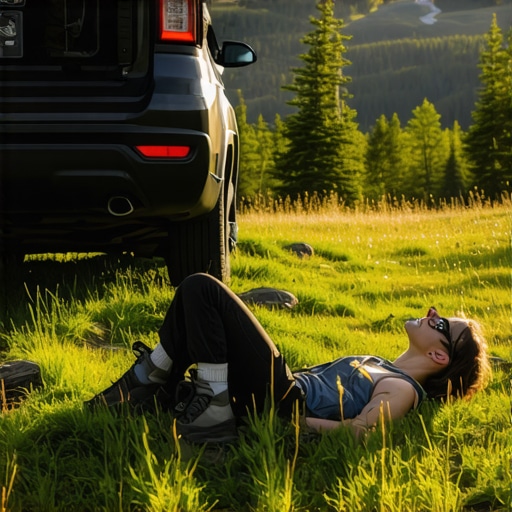
The absolute first thing you should do when you reach the trailhead isn’t cracking a beer or peeling off your socks—it’s getting your spine out of a vertical position. I call this the ‘Trailhead Reset.’ Last October, after a particularly brutal 12-mile loop, I made the mistake of immediately sitting on my tailgate to change shoes. My back seized so hard I couldn’t reach my laces, and I spent the drive home in a cold sweat. Now, I find a flat spot and lay flat on my back with my knees bent for at least five minutes. This allows the discs to rehydrate and the muscles to stop ‘guarding’ before the vibration of a car ride starts. If you want to keep your joints healthy, you need to incorporate a morning movement routine that lubricates your joints before the hike, but this post-hike window is when you actually prevent the injury from setting in.
Reactivate your glutes to save your lumbar
By the time you finish a hike, your glutes have likely ‘turned off’ due to fatigue, leaving your lower back to do all the heavy lifting during the walk back to the car. If you’re feeling that familiar ache, it’s often because of why your glutes go to sleep after one hour of sitting, which is exactly what happens if you jump straight into the driver’s seat. Before you turn the key, perform ten gentle glute bridges on the ground. This ‘wakes up’ the posterior chain and provides a natural corset of support for your spine. Be careful with your stretching choices here; you want to avoid the 90-90 hip stretch mistake that is hurting your lumbar spine because over-rotating a tired spine can actually cause more instability. Instead, focus on the one move that fixes a tight psoas muscle to release the front of your hips without putting your vertebrae at risk.
Breathe space into your tightest muscles
Most hikers finish a trail taking shallow, chest-focused breaths because their core is tired and their pack straps have been compressing their ribcage. This keeps your nervous system in a ‘fight or flight’ state, which increases muscle tension. I’ve found that taking two minutes to learn how to breathe into your lower back to release tension acts like an internal massage. By directing your breath into the back of your lungs, you physically expand the space between your ribs and your pelvis from the inside out. Finally, once you are ready to leave, make sure you use the best way to get into a car if you have back pain—sitting down first and then swinging your legs in together—to avoid the shearing force that often triggers a post-hike spasm.
Why your core strength isn’t the shield you think it is
I used to spend hours doing planks and crunches, convinced that a ‘rock-solid core’ was the only thing standing between me and a herniated disc. But here’s the contrarian truth: raw strength is useless if your nervous system is misfiring. In fact, many hikers make the mistake of constantly bracing their midsection, but why you should stop sucking in your stomach to look thinner is a lesson that applies to the trail too. When you chronically ‘suck it in,’ you actually restrict the diaphragm and increase intra-abdominal pressure in a way that creates more rigidity than actual stability. This leads to that ‘stuck’ feeling in your mid-back because you’ve essentially locked your own shock absorbers. If you’ve been working out religiously and still feel like a tin man after five miles, why your core strength isn’t stopping your back aches might come down to this lack of fluid, reactive movement.
Stop trying to pull your hamstrings into submission
We’ve all been there—standing at the car, bent over, trying to touch our toes because our legs feel like tight piano wires. But this is the ‘oops’ factor that most people miss. Often, your hamstrings aren’t actually short or tight; they are ‘neurologically tethered.’ They are pulling tight to protect a vulnerable lower back. According to spine biomechanics expert Dr. Stuart McGill, aggressive stretching of a fatigued spine can lead to increased joint laxity and more pain. This is exactly why stretching your hamstrings might be making your back pain worse. You think you’re helping, but you’re actually pulling on a nerve that’s already irritated from the hike. Instead of forcing length, you need to address the root cause, which is often a lack of lumbar support and poor hip mechanics.
Could your big toe be the reason your lumbar is screaming?
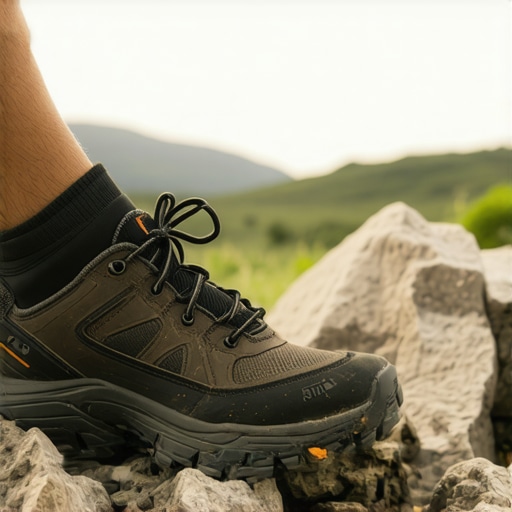
This is the level of nuance most people overlook. When you’re trekking through uneven terrain, every single step requires your big toe to extend so your foot can push off properly. If that joint is stiff—maybe from years of tight boots or an old injury—your body has to find that movement somewhere else. It usually steals it from your lower back. I spent years foam rolling my glutes when the real culprit was my feet. Learning how a stiff big toe is causing your chronic lower back pain changed everything for me. It’s about the kinetic chain; if the foundation is off, the roof—your spine—starts to sag. To fix this, I started using small mobility drills at the trailhead, like how to use a tennis ball to release tension in your feet and back, which instantly improved my gait and reduced the ‘zap’ I felt in my car seat.
The trap of the ‘self-adjustment’
When that stiffness hits on the drive home, the temptation to twist your torso until you hear a loud ‘pop’ is almost irresistible. It feels like instant relief, right? But here is the danger: you are likely just ‘cracking’ the joints above and below the one that is actually stuck. This creates hyper-mobility in the wrong places while the problem area stays locked. Understanding the truth about why cracking your own neck feels good but harms you is vital for long-term health. You’re essentially chasing a temporary endorphin rush while causing micro-trauma to your ligaments. To get lasting results, you need to master your mobility through controlled, deliberate movements rather than violent twists. Have you ever fallen into the trap of ‘self-cracking’ only to have the pain return ten minutes later? Let me know in the comments. We need to stop the cycle of temporary fixes and start building a spine that can actually handle the mountains we love to climb.
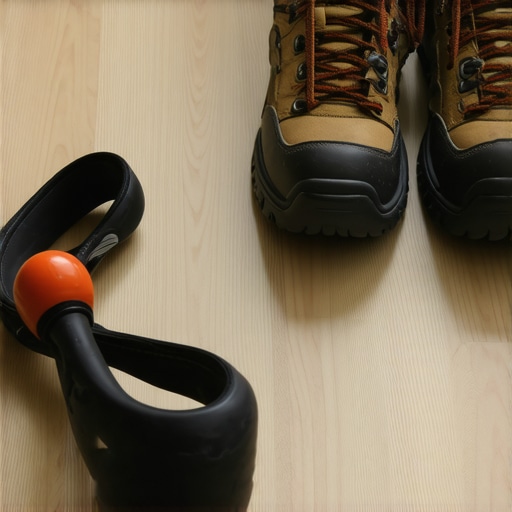
If you’re serious about staying on the trail into your 70s, you have to move past the ‘thump and dump’ method of recovery—where you just collapse on the couch and hope for the best. I’ve found that specific tools, like a firm lacrosse ball or a high-density psoas release tool, are non-negotiable for targeting the deep tissues that a soft foam roller just can’t reach. My personal favorite is a lumbar traction block used for just three minutes after a heavy-pack day to help restore the natural curve of the low back. Dr. Kelly Starrett, a renowned physical therapist and author of Becoming a Supple Leopard, emphasizes that you need to spend at least two minutes in a specific mobilized position to create actual physiological change in the fascia. Anything less is just a temporary neurological trick that won’t last until your next trek. To get the most out of these tools, you need to master your mobility by understanding the difference between simple stretching and actual joint mobilization.
Put down the foam roller and use these precision tools instead
For years, I dragged a foam roller to every trailhead, but I noticed it only ever provided a surface-level relief. Now, I use a pair of mobility balls taped together—often called a ‘peanut’—to specifically target the thoracic spine. This tool allows the spinous processes to nestle in the gap while the pressure hits the paraspinal muscles directly. This is crucial because your mid-back often bears the brunt of a heavy pack, and if those segments lock up, your lower back has to compensate by becoming too mobile. By integrating the deep core connection that stops your spine from shear stress, you create a stable internal environment that makes these external tools ten times more effective. I also recommend a simple yoga strap to assist with leg-lowering drills, which helps reset the pelvis after a day of climbing steep inclines.
How can I maintain peak spinal mobility for the long haul?
Consistency beats intensity every single time. You don’t need a grueling hour-long session; you need five minutes of daily spinal alignments for lasting relief. I make it a habit to perform the wall angel move that reverses a day of hunching every evening while my dinner is in the oven. This maintains the range of motion in my shoulders and prevents that permanent ‘hiker’s slouch’ from setting in. Over time, these small wins stack up, preventing the degenerative changes that often lead people to believe they need surgery or permanent medication. You are essentially teaching your nervous system that it is safe to move through a full range of motion, which is the ultimate key to posture correction secrets that transform back pain outcomes.
Digital posture tools are the next frontier
I suspect we are rapidly moving toward a world where real-time gait analysis is built into our hiking boots and wearable sensors. Imagine a subtle vibration in your smartwatch telling you that your left hip is dropping or that you’re over-striding, putting 15% more shear stress on your L5-S1 disc before you even feel the first twinge of pain. This ‘preventative biofeedback’ will eventually replace the need for reactive treatments. Until then, I encourage you to try one specific advanced tip: the next time you finish a hike, perform a ‘passive hang’ from a sturdy tree branch for 30 seconds. It’s the simplest, most effective way to decompress the entire spine naturally. If you’ve found a particular tool that changed the game for your recovery, I want to hear about it—let’s keep the conversation going so we can all stay on the mountain longer.
The Hardest Lessons I Learned After Miles of Misery
Looking back, I wish I could tell my younger self that a stiff back isn’t a trophy of a hard day’s work. One major lightbulb moment was discovering that stretching isn’t always the cure-all we are led to believe. In fact, I realized that stretching your hamstrings might be making your back pain worse if your nerves are already sensitized from a heavy pack. Another realization was that my “strong” core was actually just a stiff one; learning the secret to strengthening your deep core without sit-ups changed how I stabilize my spine on uneven terrain. Finally, I stopped ignoring my feet—realizing what your foot arch says about your chronic hip pain was the final piece of the puzzle for my lumbar health during long descents.
My Go-To Toolkit for Pain-Free Adventures
I don’t leave for a trailhead without a few essentials that I trust implicitly. First, a high-density lacrosse ball is non-negotiable for pinpointing those deep glute knots that foam rollers just can’t reach. Second, I highly recommend the book Becoming a Supple Leopard by Dr. Kelly Starrett for anyone wanting to understand their own joint mechanics. Third, I always keep a firm lumbar roll in my car for the drive home, because I’ve seen the truth about posture correctors and braces and know that active support beats passive restriction every time. For those days when the ache feels particularly deep, I follow mobility mastery simple exercises to relieve chronic back pain to get my system back online safely.
Your Spine Deserves as Much Care as Your Hiking Boots
You wouldn’t hike 20 miles in boots that were falling apart, so don’t ask your back to carry the load without proper maintenance. Taking five minutes at the trailhead to reset your nervous system isn’t just a luxury—it’s how you ensure you’re still hitting the trails decades from now. By unlocking better posture through these small habits, you’re not just avoiding back pain; you’re investing in a lifetime of movement and exploration. I want you to feel as good on the final descent as you did when you first stepped onto the trail. Have you ever felt that sharp ‘zap’ in your back the moment you sat down in the car after a long hike? Let me know how you handled it in the comments below!